

Affiliate Product
D-Mannose Urinary Support: Benefits & Best D-Mannose Supplements
D-Mannose Urinary Support: Benefits & Best D-Mannose Supplements
Affiliate Disclosure: This article may contain affiliate links. As an Amazon Associate, we may earn a commission from qualifying purchases at no additional cost to you. This helps support our website and allows us to continue creating free educational health and wellness content.
What Is D-Mannose?
D-mannose is a naturally occurring simple sugar found in small amounts in certain fruits and vegetables. It is also available as a dietary supplement in capsules and powders and is commonly marketed for urinary tract and bladder wellness.
D-mannose is absorbed through the digestive system and some of it is excreted through the urine. Researchers have studied whether this characteristic could influence the ability of certain bacteria to adhere to cells lining the urinary tract.
Important: D-mannose is a dietary supplement. It is not an antibiotic and should not be used as a substitute for appropriate medical evaluation or treatment of a urinary tract infection (UTI).
Quick Facts
Ingredient: D-Mannose
Type: Naturally occurring simple sugar
Common Uses: Urinary tract wellness and bladder support
Common Forms: Capsules and powder
Evidence: Research has produced mixed results, and a large randomized clinical trial published in 2024 did not find D-mannose effective for preventing recurrent medically attended UTIs in women in primary care.
Why Is D-Mannose Popular?
D-mannose has become a popular ingredient in urinary-health supplements because it provides a non-antibiotic option for people interested in supporting urinary wellness.
It is commonly sold alone or combined with cranberry, probiotics, hibiscus, vitamin C, or other urinary-support ingredients.
How Does D-Mannose Work?
The proposed mechanism of D-mannose relates primarily to certain strains of Escherichia coli (E. coli), one of the most common bacteria associated with urinary tract infections.
Some strains of E. coli use structures called fimbriae to attach to cells lining the urinary tract. Laboratory research suggests D-mannose may bind to sites involved in this adhesion process, potentially making it more difficult for certain bacteria to attach to urinary-tract cells.
This proposed anti-adhesion mechanism is different from killing bacteria. D-mannose therefore should not be described as a natural antibiotic.
Scientific Evidence
Earlier small studies generated interest in D-mannose for recurrent urinary tract infections, but the overall evidence has remained uncertain.
Importantly, a large randomized, double-blind, placebo-controlled clinical trial published in 2024 studied 598 women with recurrent UTIs. Participants received either 2 grams of D-mannose daily or placebo for six months.
The study found no statistically significant reduction in subsequent medically attended UTIs among women taking D-mannose compared with placebo.
Therefore, D-mannose should not be presented as a proven method for preventing recurrent UTIs. Consumers may still encounter it as a urinary-wellness supplement, but expectations should remain realistic.
Potential Uses of D-Mannose
D-mannose supplements are commonly marketed for:
- General urinary tract wellness
- Bladder wellness
- Supporting a healthy urinary environment
- Providing a non-antibiotic urinary-support ingredient
- Complementing a broader urinary-wellness routine
These uses should be considered nutritional support rather than treatment or guaranteed prevention of urinary tract infections.
Why Choose a D-Mannose Supplement?
D-mannose supplements may appeal to adults looking for a simple urinary-support ingredient without the calories and additional ingredients found in some beverages or combination formulas.
Standalone D-mannose products also make it easier to see exactly how much D-mannose is being consumed.
When comparing products, consider:
- D-mannose amount per capsule or serving
- Number of capsules required per serving
- Capsule versus powder format
- Additional ingredients
- Serving recommendations
- Cost per serving
Who May Consider D-Mannose?
D-mannose may appeal to adult women and men interested in adding a urinary-support supplement to their wellness routine.
However, people experiencing repeated UTIs or persistent urinary symptoms should discuss those symptoms with a healthcare professional rather than relying on D-mannose or other supplements.
How to Use D-Mannose
Follow the directions on the specific product label because D-mannose amounts and recommended serving sizes differ between products.
D-mannose capsules commonly provide around 500 mg per capsule, while powders can provide larger amounts per serving.
Do not assume that taking more D-mannose will produce better results. Higher amounts can increase the likelihood of gastrointestinal side effects.
Possible Side Effects
D-mannose is generally well tolerated by many adults, but possible side effects can include:
- Loose stools
- Diarrhea
- Bloating
- Abdominal discomfort
- Nausea
Who Should Use Extra Caution?
Talk with a qualified healthcare professional before using D-mannose if you:
- Have diabetes or difficulty regulating blood sugar
- Have kidney disease or impaired kidney function
- Take multiple prescription medications
- Are pregnant or breastfeeding
- Are giving the supplement to a child
- Have recurrent urinary tract infections
- Have unexplained or persistent urinary symptoms
Seek appropriate medical attention for painful urination, fever, chills, blood in the urine, severe pelvic discomfort, back or side pain, vomiting, inability to urinate, or worsening urinary symptoms.
Our Recommended D-Mannose Supplements
Our selections provide several approaches to D-mannose supplementation, including straightforward standalone formulas and a urinary-health-focused product.
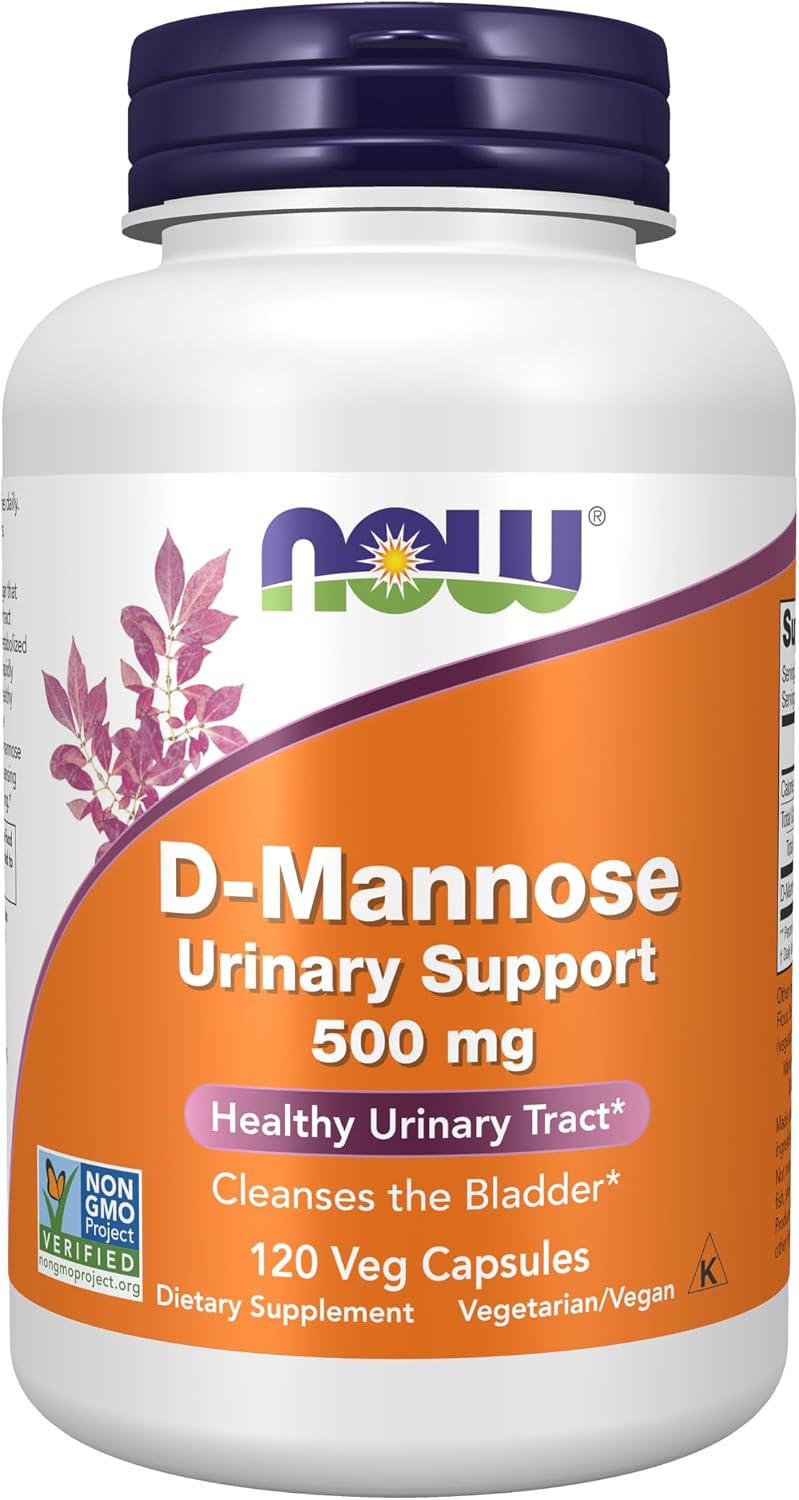
🥇 Best Overall: NOW Foods D-Mannose
Why We Chose It: NOW Foods D-Mannose is our Best Overall selection because it provides a straightforward standalone D-mannose formula from an established supplement manufacturer.
The current NOW Foods capsule formula provides 500 mg of D-mannose per vegetarian capsule.
Key Features:
- 500 mg D-mannose per capsule
- Standalone D-mannose formula
- Vegetarian capsules
- Designed for urinary tract and bladder wellness
- Available in multiple bottle sizes
- Established supplement brand
Best For: Adults looking for a straightforward D-mannose supplement from a well-established supplement company.
👉 Check Current Price on Amazon
💰 Best Budget: Nutricost D-Mannose
Why We Chose It: Nutricost D-Mannose offers a straightforward formula with a practical serving size and may appeal to shoppers looking for a budget-conscious D-mannose option.
The manufacturer's current formula provides 500 mg of D-mannose per capsule and 1,000 mg per two-capsule serving.
Key Features:
- 500 mg D-mannose per capsule
- 1,000 mg per two-capsule serving
- 120 capsules in the current manufacturer product
- 60 servings per bottle
- Non-GMO
- Gluten-free
- Simple standalone D-mannose formula
Best For: Adults looking for an affordable standalone D-mannose capsule.
👉 Check Current Price on Amazon
⭐ Most Popular: AZO D-Mannose Urinary Tract Health
Why We Chose It: AZO is strongly associated with urinary-health products, making its D-mannose product an appealing option for shoppers specifically searching for bladder and urinary-tract support.
Key Features:
- D-mannose-based urinary support
- Designed specifically for urinary tract wellness
- Convenient daily supplement format
- From a widely recognized urinary-health brand
Best For: Adults who prefer a D-mannose product from a brand specializing in urinary and bladder wellness.
Note: Check the current Supplement Facts panel on the Amazon listing before purchasing because product formulations and serving sizes can change.
👉 Check Current Price on Amazon
Which D-Mannose Supplement Should You Choose?
| Product | Formula Style | Best For |
|---|---|---|
| NOW Foods D-Mannose | Standalone D-mannose | Best overall straightforward formula |
| Nutricost D-Mannose | Standalone D-mannose | Budget-conscious shoppers |
| AZO D-Mannose Urinary Tract Health | Urinary-health-focused D-mannose product | Shoppers who prefer a urinary wellness brand |
D-Mannose vs. Cranberry
D-mannose and cranberry are both commonly found in urinary-support supplements, but they are different ingredients.
D-Mannose: A simple sugar studied primarily for its proposed ability to interfere with the adhesion of certain bacteria to urinary tract cells.
Cranberry: Contains A-type proanthocyanidins (PACs), plant compounds also studied for bacterial anti-adhesion properties.
Some urinary supplements combine both ingredients. However, neither D-mannose nor cranberry should be considered a replacement for antibiotics or appropriate medical treatment when an active UTI is present.
Frequently Asked Questions
What is D-mannose?
D-mannose is a naturally occurring simple sugar found in small amounts in certain foods. Supplemental D-mannose is commonly marketed for urinary tract and bladder wellness.
Does D-mannose prevent UTIs?
Current evidence does not establish D-mannose as an effective way to prevent recurrent UTIs. A large 2024 randomized placebo-controlled clinical trial involving 598 women found that daily D-mannose did not significantly reduce recurrent medically attended UTIs.
Can D-mannose treat a UTI?
No. D-mannose should not be used as a substitute for appropriate medical evaluation and treatment of a suspected urinary tract infection.
How does D-mannose work?
D-mannose has been studied for a proposed anti-adhesion mechanism involving certain strains of E. coli. It may interact with bacterial structures involved in attachment to urinary tract cells. This proposed mechanism does not mean D-mannose kills bacteria or functions as an antibiotic.
Is D-mannose the same as cranberry?
No. D-mannose is a simple sugar, while cranberry is a fruit containing several plant compounds, including A-type proanthocyanidins. Both are commonly marketed for urinary wellness, and some supplements combine them.
Can D-mannose be taken every day?
Many D-mannose products are marketed for regular use, but evidence does not currently support recommending daily D-mannose specifically to prevent recurrent UTIs. Follow product directions and discuss long-term use with a healthcare professional when appropriate.
Is D-mannose only for women?
No. D-mannose supplements are marketed to both women and men. However, urinary symptoms in men deserve particular attention because prostate conditions and other medical issues can affect urinary function.
Can older adults take D-mannose?
Older adults should consider kidney function, diabetes, prescription medications, and the underlying cause of urinary symptoms before adding a D-mannose supplement. Persistent urinary symptoms should be evaluated rather than automatically treated with supplements.
Final Thoughts
D-mannose is a popular nonprescription ingredient found in many urinary and bladder-support supplements. Its proposed mechanism involving bacterial adhesion has made it particularly popular in products marketed toward people concerned about urinary tract wellness.
However, newer high-quality clinical evidence has challenged earlier expectations about D-mannose. A large randomized clinical trial found that daily D-mannose did not significantly prevent recurrent medically attended UTIs in women. For this reason, D-mannose is best presented as an optional urinary-support supplement rather than a proven UTI-prevention strategy.
Among our selections, NOW Foods D-Mannose is our Best Overall choice for a straightforward standalone formula. Nutricost D-Mannose provides a budget-friendly alternative, while AZO D-Mannose Urinary Tract Health may appeal to shoppers who prefer a urinary-health-focused brand.
Medical Disclaimer
This information is provided for educational and informational purposes only and is not intended to diagnose, treat, cure, or prevent any disease. Dietary supplements are not appropriate or necessary for everyone, and individual results may vary.
D-mannose should not replace appropriate medical care for a suspected urinary tract infection. Consult a qualified healthcare professional before beginning a D-mannose supplement if you have diabetes, kidney disease, take medications, are pregnant or breastfeeding, or experience recurrent urinary problems.
Seek medical attention for fever, chills, painful urination, blood in the urine, severe pelvic pain, back or side pain, vomiting, inability to urinate, or persistent or worsening urinary symptoms.
👉 Buy on Amazon Here
🥇 Best Overall: NOW Foods D-Mannose - https://amzn.to/4xHvMoY
💰 Best Budget: Nutricost D-Mannose - https://amzn.to/4dfqM2L
⭐ Most Popular: AZO D-Mannose Urinary Tract Health - https://amzn.to/4gsTbEJ
About the Author
Nesie Njamnsi
Nesie Njamnsi is the founder of NESY Collection, where artisanal craftsmanship meets a heartfelt commitment to natural health and wellness. With a background in biochemistry and years of entrepreneurial experience, she designs and curates handcrafted jewelry, fashion accessories, and home décor that celebrate elegance and personal style.
Nesie is also a passionate advocate for natural living and preventive wellness, sharing time-tested home remedies and practical guidance on using everyday herbs, vegetables, and fruits to support the body, boost immunity, and prevent illness — helping families embrace simple, natural habits for a healthier lifestyle.
Through NESY Collection, she brings beauty and well-being together in one thoughtfully curated space.
Connect With Me
My Stores
Share